The Wazwan: Kashmir's Grand Feast and the Art of Belonging
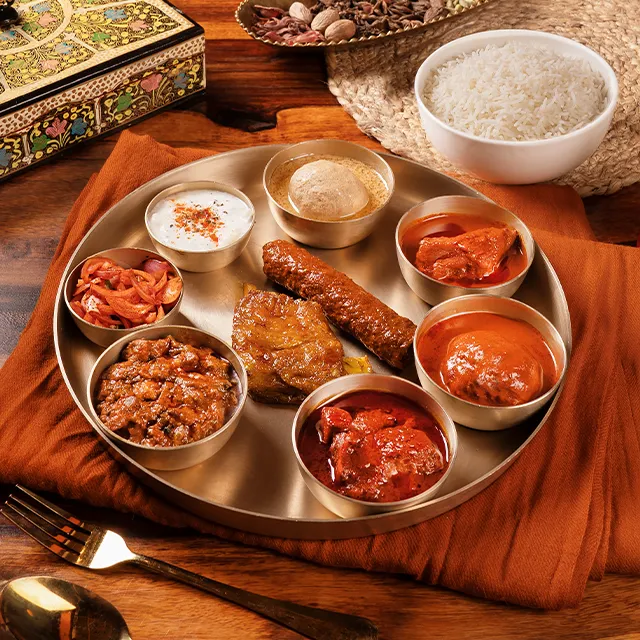
There is a moment, somewhere between the third course and the fourth, when a Wazwan stops being a meal and becomes something else entirely. The room quiets imperceptibly. Spoons slow. Eyes close. This is the moment Kashmir arrives at your table.
The Wazwan is not simply a multi-course feast. It is a covenant. In Kashmiri tradition, to invite someone to a Wazwan is to say: you matter. The guest is seated on the floor, four to a traam - a large copper plate piled high with rice, flanked by small bowls of yogurt and a crisp, golden tallow-fried onion.
What follows is a procession of dishes that can stretch to thirty-six courses in its most ceremonial form, each arriving in a specific order, each with its own intention.
The Waza and the Grammar of the Feast
At the heart of any Wazwan stands the Waza - the master chef, a title passed through generations. The Waza does not simply cook; he orchestrates. He has been awake since before dawn, tending fires that cannot be rushed.
Roganjosh arrives first, a burnished red crown of a dish, its colour drawn from dried Kashmiri chillies that are more about fragrance than fire. Then comes Tabak Maaz - ribs fried until their edges crisp in their own rendered fat, yielding in a single bite to a tenderness that seems impossible.
The Methi Maaz follows, neck meat slow-braised with dried fenugreek, its bitterness a deliberate foil to the richness preceding it.
Gushtaba, the Apex
And then, Gushtaba. The grand finale. Meatballs pounded to silk, simmered in yogurt gravy scented with fennel and dry ginger. In Kashmiri culture, serving Gushtaba signals the end of the meal, but also its apex - the host's ultimate expression of care.
What is extraordinary about the Wazwan is not merely the food, but the grammar of it. The sequence is not arbitrary. Each dish prepares the palate for the next. The meal moves from intensity to gentleness, from spice to soothe, as if it has been designed not just to feed, but to carry you somewhere.
At Matamaal, the Wazwan is our reference point - the north star against which every dish is measured. Not every meal can be a Wazwan, but every meal can carry its spirit: the conviction that cooking for someone is one of the most profound things you can do for them.