Tales from the Saffron Town - K&M Exclusive
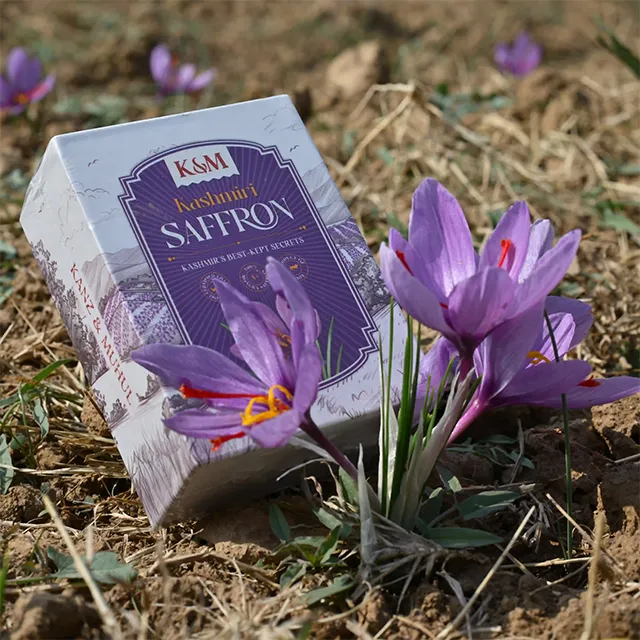
Don't be afraid. Pluck the flower properly. Yes, very good. The young boy dressed in a dashing black leather jacket and jeans seems like an anomaly in the field, but he follows his father's instructions diligently.
Welcome to the Saffron Town
As Chinar leaves turn brown and lose their sheen, Saffron flowers yawn and stretch lazily towards the sky. For them, it's just the beginning of a vast purple canvas that brings the quiet town of Pampore to life.
Locally known as Kong Posh, Saffron harvesting lies at the heart of Pampore. Several families rely on it for their income and thus, the process is almost sacred to them.
The Cultivation
Fields are ploughed twice to prepare the soil for Saffron - once in June and then in August. Flowers bloom in October and farmers have a brief, two-week period to harvest the delicate red-gold strands that are dried and packed for sale.
The Challenges
Every October, farmers enter a sea of purple flowers with great trepidation in their hearts. Will the yield decrease this year too? Saffron requires a certain moisture level in the soil and cannot withstand harsh heat. The butterfly effect of climate change decreases the yield of Kashmiri Saffron every year.
“15 days and 1,50,000 flowers - that's what it takes to collect one kilogram of Saffron. No wonder it's the most expensive spice in the world!”
At Kanz and Muhul, we partner with farmers who produce Saffron in its purest form and conduct thorough quality checks to ensure your kitchen has no room for pale or inferior Saffron strands.
Saffron is not just a spice. It's a cultural tradition - one worth holding on to.