Pampore's Purple Gold: The Story of Kashmiri Saffron
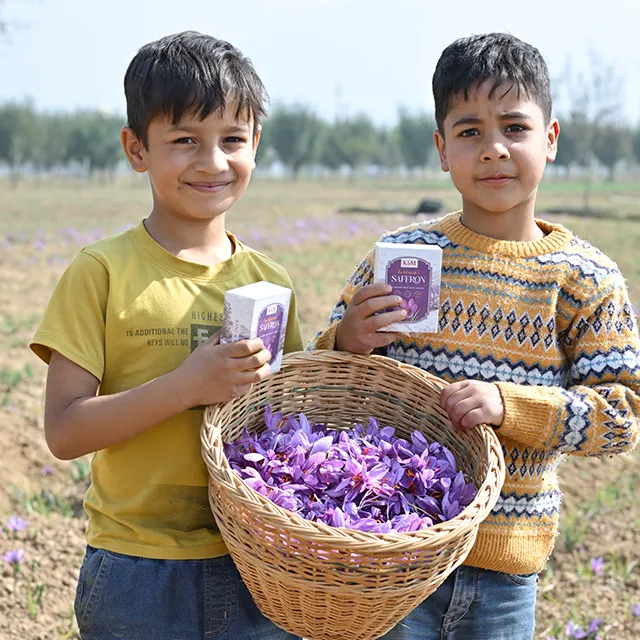
Every October, the fields outside Pampore turn purple. For approximately two weeks - no more - the Crocus Sativus Cashmirianus blooms, transforming an otherwise quiet farming belt on the outskirts of Srinagar into something that looks borrowed from a dream.
Locals call it Kong Posh. The world calls it Kashmiri Saffron. Traders who have dealt in it for centuries simply call it the best.
A Harvest Without Shortcuts
The harvesting of saffron is one of the most labour-intensive agricultural practices on earth. The flowers bloom only in the early morning hours, and they must be plucked by hand before the sun rises and causes them to wilt. There is no machinery that can do this.
From each flower, three stigmas are carefully separated by hand. These are the red strands you know as saffron. They are dried - traditionally over charcoal - and then graded.
The best Kashmiri saffron, Mongra grade, consists entirely of the deep red stigmas with their slightly bulbous tips intact. Its colour is so concentrated that a few threads will transform a cup of warm water into deep amber within minutes.
Why Kashmiri Saffron Is Different
The Crocus Sativus Cashmirianus produces a higher concentration of safranal, crocin, and picrocrocin - the compounds responsible for saffron's aroma, colour, and flavour - than its Iranian or Spanish counterparts.
Climate change has made this more precarious than ever. The saffron karewas around Pampore are under increasing pressure. Yield has declined significantly over the past two decades, and the GI tag granted in 2020 was only one step toward protection.
At Kanz & Muhul, we work directly with farmer families in Pampore whose relationship with saffron spans multiple generations. When you hold a pinch of our saffron, you are holding something that a family staked their October mornings on.